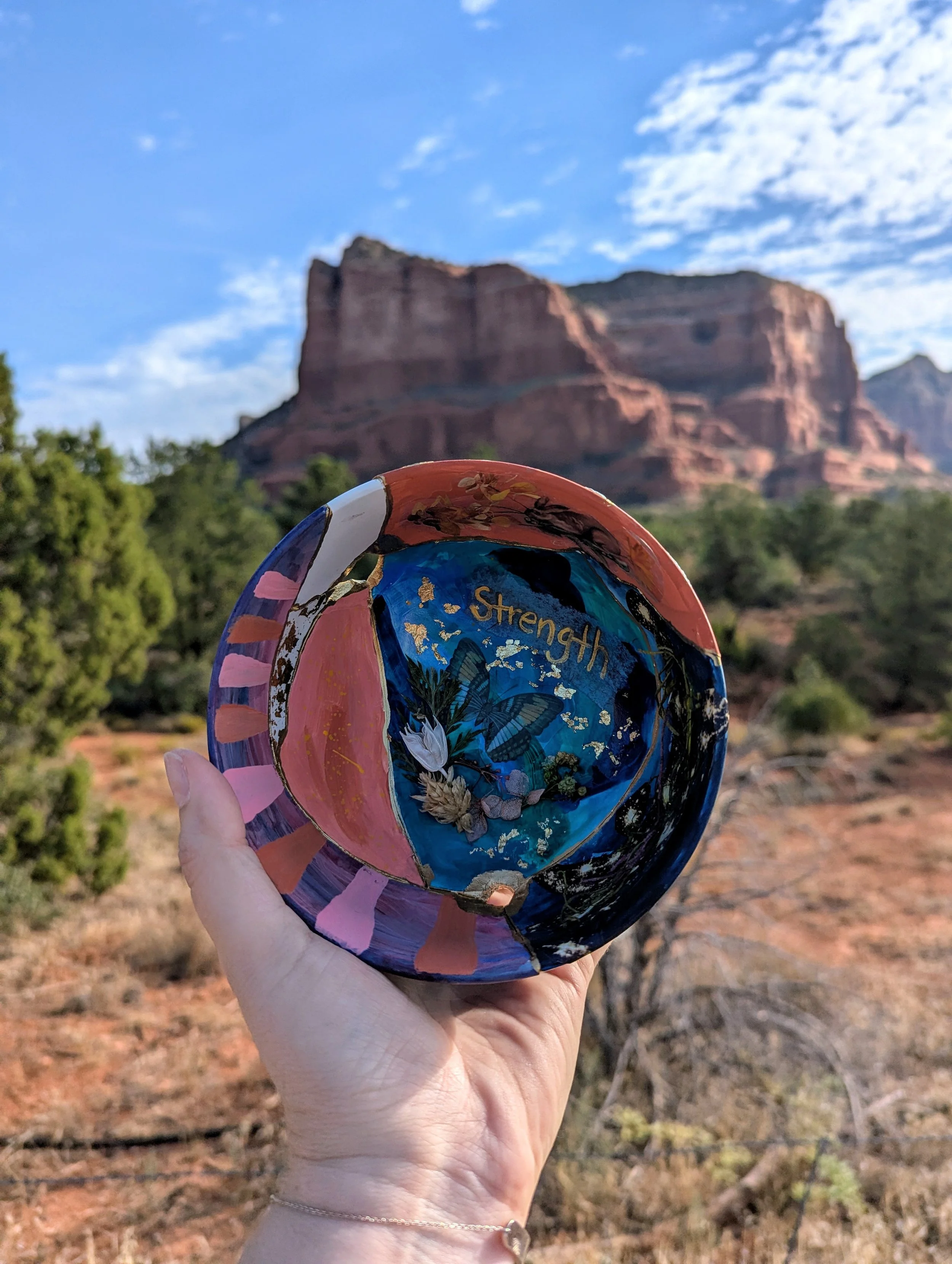
About Art Therapy
What's the difference between an Art Therapist and a therapist who incorporates art into counseling?
An Art Therapist uses art within the therapeutic process, whereas those who do art in therapy sessions do very basic art activities.
An Art Therapist has specialized graduate training in art therapy and is educated to use the creative process, art materials, and the artwork itself as central components of assessment and treatment. The art-making process often becomes the primary therapeutic intervention, with careful attention given to artistic choices, symbolism, and the relationship between the client, the artwork, and the therapist.
A Licensed Marriage and Family Therapist (LMFT), Licensed Professional Clinical Counselor (LPCC), or Licensed Clinical Social Worker (LCSW) who incorporates art into counseling primarily draws from their training in psychotherapy while using art as a supportive therapeutic tool. Rather than focusing on interpreting artwork or making art the central treatment modality.
What does an art therapist do?
Art therapists are specially trained to help people explore their inner world through creative expression. Instead of relying solely on verbal processing, art therapy uses drawing, painting, collage, and other creative mediums to help clients’ express emotions, uncover patterns, and make sense of experiences that may be difficult to put into words. Art therapists are trained clinicians who blend psychological theory with the healing power of the creative process. We guide clients in using imagery, symbolism, and the act of creating as tools for insight, emotional regulation, nervous system support, and deeper self-understanding. The focus isn’t on artistic skill—it’s on using creativity as a pathway toward healing, clarity, and authentic connection with oneself.
What does an art therapy session look like?
An art therapy session is a blend of conversation, creative exploration, and gentle emotional processing. We start by checking in about what’s been happening in your life and what feels most present that day. From there, we may use drawing, painting, collage, or other creative materials to help you express experiences that are hard to put into words. The art you create becomes a starting point for deeper reflection—helping us explore emotions, patterns, and memories in a way that feels safe and grounded. You don’t need any artistic skill; the focus is on the process, not the product. Throughout the session, I guide you in making meaning from what emerges, supporting you in emotional regulation, insight-building, and reconnecting with your authentic self.
What happens to the artwork after session?
Most often, the artwork stays with you. Some clients choose to take their pieces home, while others prefer to leave them in the therapy space so they can revisit them in future sessions. If a piece feels emotionally charged or unfinished, we may keep it safely stored to return to later. The artwork is always treated with care and confidentiality—it’s part of your therapeutic process, and you get to decide what feels right for you. With your permission, I photograph your artwork at the end of each session so it can be documented and securely stored in my HIPAA compliant electronic health record system.
Do I need to have artistic skills to participate in art therapy?
No! The focus isn’t on artistic skill—it’s on using creativity as a pathway toward healing, clarity, and authentic connection with oneself. Anyone and everyone can create art!